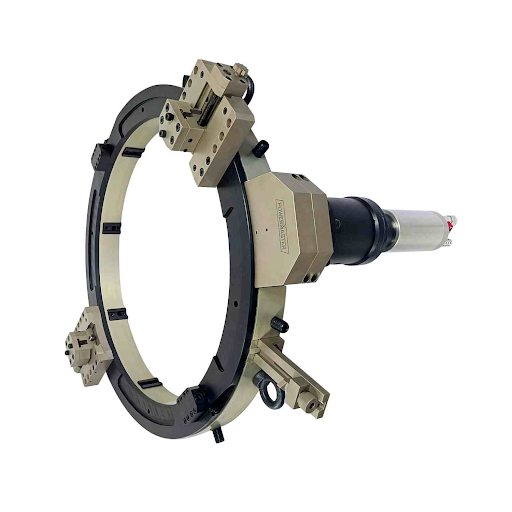
The offshore environment is very harsh. There is a lack of space, rapidly changing weather, and each weld needs to withstand the stress of vibration, pressure, and saltwater. A pipe bevelling machine is the first process on the list that determines whether the weld will perform in these circumstances. If the bevelling is not done properly, then the joint can be compromised right from the start.
That is why offshore construction and maintenance crews use pipe bevelers designed for small spaces and precision, rather than speed.
Why Precision Comes First
The pipelines used in offshore platforms have oil, gas, or fluids at high pressure inside. An improperly formed bevel or uneven wall thickness leads to inadequate penetration, slag, or incomplete fusion. As time passes, those minor flaws develop into leakage and structural failures of the structure, the repair of which proves much more expensive in open waters than on land.
The bevelling machines made specifically for industrial purposes maintain a uniform bevel angle all through the process, whether it is one-time cutting or numerous repetitions on different pipe joints. Such uniformity is the key to getting an inspected weld joint the first time around, without having to perform any costly rework offshore.
Why Portability Matters Just as Much
Offshore platforms don’t offer the luxury of a full fabrication shop. Technicians often work in confined risers, cramped module rooms, or narrow pipe racks where a bulky machine cannot physically fit. This is where compact, split-frame bevelling machines make a real difference. They clamp directly onto the pipe, so there is no need to move the pipe to the machine.
Pneumatic and electric bevelling machines are particularly suited to this environment. Pneumatic models are useful where compressed air is already part of the platform’s utility setup, while electric machines offer more control in areas where air supply is limited. Both options are built to be carried, set up, and operated by a single technician, which matters when crew size and deck space are both constrained.
Handling Harsh Conditions
Saltwater exposure, humidity, and constant movement are part of daily life offshore. Equipment used in this setting needs to resist corrosion and keep performing without frequent recalibration. A well-built bevelling machine should hold its accuracy even after repeated use in these conditions, so technicians are not second-guessing the quality of every cut.
That is the reason why cutting bits are as important as the machine itself. Sharp and properly paired cutting bits ensure low vibrations during the cutting process, ensuring both high-quality beveling and longer tool life.
Conclusion
The time for offshore maintenance is limited, and any downtime is costly. A tube bevelling machine that is portable and precise is helpful for faster pipe preparation without lowering the quality of the weld.
For offshore projects where every joint has to be right the first time, having equipment built for the environment is not optional. Tube Expander’s range of pneumatic and electric bevelling machines, along with split frame models, is designed to meet exactly this need, offering the portability and consistent accuracy that offshore fabrication and maintenance work demands.
If your team is looking for bevelling equipment that holds up on offshore platforms, get in touch with them to find the right machine for your job.









+ There are no comments
Add yours