Heat is the quiet killer inside plastic housings. An LED driver, a charger, and a battery pack for a two-wheeler all make heat. If that heat has nowhere to go, parts run hot, colours shift, and lifespans drop. A thermal conductivity additive helps the plastic itself carry that heat away, so the part stays cooler without bolting on a metal sink. For engineers in India building LED lights, power electronics, and e-mobility parts, this is a simple lever worth pulling.
Why plastic housings trap heat
Most engineering plastics are good insulators. That is great for electrical safety. It is bad for cooling. A standard nylon or PBT housing holds heat close to the hot spot instead of spreading it. The surface stays cool to the touch while the inside bakes. Over months, that trapped heat ages the resin and the parts around it.
How a thermal conductivity additive moves heat
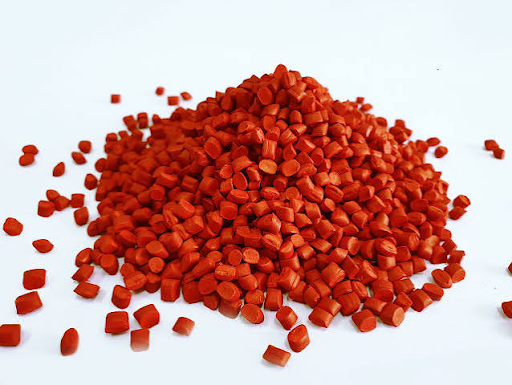
The additive puts conductive fillers into the resin. Think boron nitride, graphite, or certain ceramics. These fillers build tiny paths inside the plastic. Heat hops along those paths and reaches the outer surface faster. From there, air or a chassis carries it off.
You are not turning plastic into metal. You are lifting it from a poor conductor to a fair one. For many housings, fair is enough. The goal is to spread heat, not to sink huge loads.
Where these additives replace metal parts
Design teams use this to drop small aluminium brackets, cans and sinks. That brings real wins:
- Lighter parts, which matters a lot in e-mobility.
- Fewer assembly steps, since the housing does two jobs.
- No paint, no rust, no galvanic worries.
- Complex shapes moulded in one shot.
An LED bulb housing is a clear case. So is a sensor body, a motor controller cover, or a battery module frame. The plastic holds the electronics and quietly moves their heat at the same time.
The loading trade-off
More filler means more heat flow. It also means the part gets stiffer, more brittle, and harder to mould. You have to balance it.
| Filler loading | Heat flow | Mechanical strength | Flow / moulding |
| Low | Small gain | Near base resin | Easy |
| Medium | Good gain | Some loss | Manageable |
| High | Best gain | More brittle | Needs care |
The sweet spot sits in the middle for most housings. Push loading only as high as the part truly needs.
Where silicone masterbatch fits in
High filler loading makes the melt stiff and the surface rough. That is where a silicone masterbatch earns its place. It is a process and surface aid. A small dose does a lot:
- Better slip, so the melt flows into thin walls.
- Easier mold release, so parts pop out clean.
- Higher scratch and abrasion resistance on the finished skin.
- A smoother, more even surface.
Suryamb, for example, supplies silicone masterbatch used to smooth flow and improve release in filled compounds like these.
Making the two work together
The pairing is practical. The thermal additive handles heat. The silicone masterbatch handles flow and finish. Filled compounds are often hard to mould and scuff easily. The silicone aid softens both problems. You keep your cooling gains and still get parts that fill fully and look clean. Cycle times can settle down too, since release gets easier.
How to run a trial before scaling
Do not jump to full production. Run a staged trial.
- Set your target. Pick a surface temperature or a rise limit.
- Try two or three filler loadings. Measure heat and check strength.
- Add silicone masterbatch at a low dose. Watch flow and release.
- Test the real part, not just a plaque. Housings behave differently.
- Check the finish for scratches and gloss.
Small trials save money. They show the true trade-off for your exact part before you commit to tooling.
Conclusion
Heat management does not have to mean more metal. A well-chosen thermal conductivity additive lets the plastic housing carry its own heat, cutting weight and parts. Pair it with a silicone masterbatch, and you fix the side effects, stiff flow, and rough skin at the same time. Set a clear target, run small trials, and tune the loading. Done right, you get a cooler, lighter, cleaner part that lasts longer in the field.
FAQs
What does a thermal conductivity additive actually do? It adds conductive fillers that build heat paths inside the plastic, so the part spreads and sheds heat faster.
Can it fully replace a metal heat sink? Not always. It suits small to medium heat loads, like LED and electronics housings. Very high loads may still need metal.
Does more filler hurt the plastic? Yes, past a point. High loading raises heat flow but makes parts more brittle and harder to mould. Balance is key.
What is silicone masterbatch used for? It improves slip, mould release, surface smoothness, and scratch resistance. It is a process and surface aid, not a colourant.
Can I use both additives in one compound? Yes. They solve different problems. The thermal additive moves heat; the silicone aid helps flow and finish.
Which parts benefit most? LED housings, motor controller covers, sensor bodies, and battery module frames in e-mobility.










+ There are no comments
Add yours