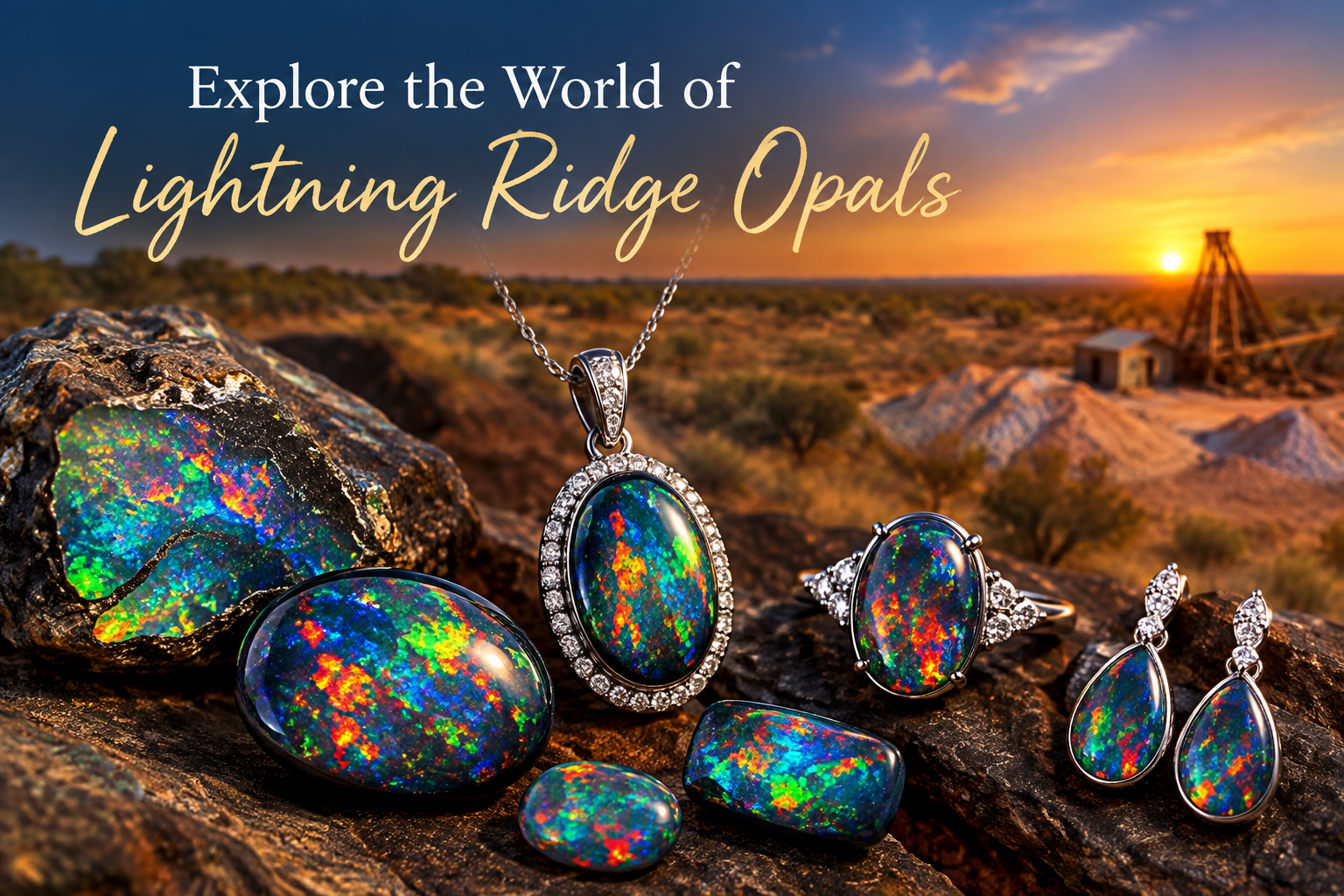
Have you ever gazed at a gemstone and felt completely mesmerised by its dancing colours? What if I told you that some of the most spectacular opals on Earth come from a small, dusty outback town in New South Wales? And what makes these particular stones so sought-after that collectors travel from across the globe to get their hands on them?
Welcome to the fascinating world of Lightning Ridge opals – Australia’s most prized gemstones and arguably the most captivating natural treasures you’ll ever encounter. This remote mining town, located about 750 kilometres northwest of Sydney, has earned its reputation as the opal capital of the world for good reason. The black opals found here display an extraordinary play of colour that simply can’t be matched anywhere else on the planet.
In this guide, we’ll take you on a journey through everything you need to know about Lightning Ridge opals. You’ll discover how these remarkable stones form deep underground, learn about the different types available, and understand what makes them so incredibly valuable. Plus, we’ll share expert tips on buying authentic opals, caring for your precious gems, and even planning a visit to the mines yourself. Whether you’re a seasoned collector or simply curious about these Australian treasures, there’s something here for everyone.
What Makes Lightning Ridge the Opal Capital of the World?
Lightning Ridge earned its prestigious title through a combination of history, geology, and sheer gemstone quality. The town’s opal fields produce approximately 95% of the world’s black opals – the most valuable variety of this gemstone. This tiny community of around 3,000 residents sits atop one of nature’s most remarkable geological formations.
The region’s opal mining history stretches back to the late 1800s when boundary rider Charlie Nettleton discovered the first black opal in 1903. What followed was an opal rush that transformed this remote corner of Australia into a gem hunter’s paradise. Today, both commercial operations and individual fossickers continue to work the fields, hoping to uncover that next million-dollar stone.
How Are Opals Formed in Lightning Ridge?
The creation of Lightning Ridge opals is a story millions of years in the making. Around 100 million years ago, this region lay beneath a vast inland sea. As the waters receded, silica-rich solutions seeped into cracks, cavities, and even fossilised remains of ancient creatures.
Over countless millennia, this silica solution dried and hardened, forming the precious opal we treasure today. The unique conditions at Lightning Ridge – including specific temperatures, acidity levels, and the presence of trace elements – created opals with an exceptionally dark body tone. This dark background allows the spectacular colour play to shine even more brilliantly than in lighter opals.
Understanding Black Opals: The Crown Jewel of Gemstones
Black opals aren’t actually black – the name refers to their dark body tone, which ranges from dark grey to jet black. This darker background acts like a canvas, making the vibrant flashes of colour appear more intense and dramatic. It’s this contrast that elevates black opals above all other opal varieties in terms of value and desirability.
The colour display, known as “play of colour,” occurs because of the opal’s internal structure. Tiny silica spheres arranged in a grid-like pattern diffract light, creating those mesmerising rainbow flashes. The most prized specimens display red fire against a dark background – these can fetch astronomical prices at auction.
Types of Opals Found in Lightning Ridge
While black opals steal the spotlight, Lightning Ridge produces several opal varieties:
Black Opals: The most valuable, featuring a dark body tone (N1-N4 on the body tone scale)
Semi-Black Opals: Slightly lighter body tone (N5-N6) but still displaying excellent colour
Crystal Opals: Transparent to translucent with vivid colour play
Boulder Opals: Opal naturally attached to its host ironstone rock
The difference between black and white opal lies primarily in body tone. White opals, typically found in South Australia’s Coober Pedy, have a light or milky background. While beautiful, they lack the dramatic colour intensity of their black cousins, making Lightning Ridge stones considerably more valuable.
What Makes Lightning Ridge Opals So Valuable?
The value of Lightning Ridge opals comes down to three key factors: rarity, quality, and global demand. Black opals are genuinely scarce – they’re found in significant quantities only in this one location on Earth. This natural scarcity, combined with steady demand from collectors and jewellery designers worldwide, keeps prices consistently high.
The Play of Colour: Understanding Opal Quality
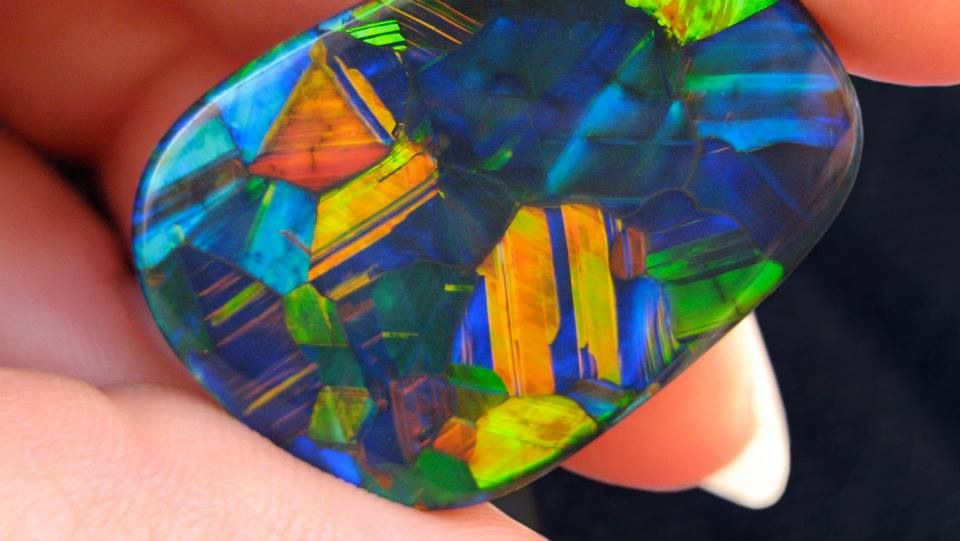
When assessing opal quality, experts examine several characteristics. The play of colour is paramount – the more vibrant, varied, and extensive the colour display, the higher the value. Red fire is the most sought-after, followed by orange, then green and blue. A stone displaying the full spectrum commands premium prices.
Body tone matters enormously too. The darker the background, the more valuable the stone (assuming good colour play). Pattern also influences price – desirable patterns include harlequin (large, angular patches of colour), rolling flash, and broad flash. Finally, clarity and the absence of inclusions or cracks affect both beauty and durability.
Are Lightning Ridge Opals a Good Investment?
High-quality Lightning Ridge opals have historically held their value well and often appreciated over time. Unlike diamonds, which are controlled by major corporations, the opal market operates more freely. Top-tier black opals remain genuinely rare, supporting long-term value.
That said, approaching opals purely as investments requires caution. The market can be volatile, and proper knowledge is essential. Investing in certified, high-quality stones from reputable dealers offers the best chance of maintaining or increasing value over time.
How to Buy Authentic Lightning Ridge Opals
Purchasing genuine Lightning Ridge opals requires knowledge and careful consideration. Unfortunately, the market contains treated stones, synthetics, and outright fakes that can fool inexperienced buyers.
What Should I Look for When Buying Lightning Ridge Opals?
Start by examining the stone’s body tone and colour play under different lighting conditions. Genuine opals display colour that shifts and dances as you move the stone – synthetic alternatives often show a more uniform, static pattern. Look for natural imperfections too; completely flawless stones at bargain prices should raise suspicions.
Always request certification from recognised gemological laboratories. Reputable dealers provide documentation detailing the stone’s characteristics and origin. When purchasing in Australia, consider buying directly from Lightning Ridge or from established opal specialists in Sydney and Melbourne who source their stones locally.
Spotting Fake or Treated Opals
Watch out for opal doublets and triplets – these are composite stones combining a thin layer of genuine opal with other materials. While these aren’t “fake” per se, they’re worth far less than solid opals and should be clearly labelled. Synthetic opals, grown in laboratories, display tell-tale patterns under magnification that experts can identify.
Treated opals, including those with artificially darkened body tones, require professional detection. If a deal seems too good to be true, it probably is. Stick with certified dealers who offer guarantees and return policies.
Caring for Your Lightning Ridge Opal
Opals require more careful handling than many gemstones due to their relatively high water content (typically 3-10%). Proper care ensures your precious stone maintains its brilliance for generations.
Visiting Lightning Ridge: An Opal Lover’s Guide
A trip to Lightning Ridge offers an unforgettable experience for gem enthusiasts. The town embraces its opal heritage with museums, mine tours, and even opportunities to try your luck fossicking.
You can absolutely fossick for opals in designated areas around Lightning Ridge. The local visitor centre provides fossicking licences and maps showing public fossicking fields. While finding a valuable stone requires luck, the experience of sifting through opal dirt connects you directly with this unique Australian tradition.
Must-visit attractions include the Australian Opal Centre, underground mine tours, and the quirky Chambers of the Black Hand. Many local miners welcome visitors into their working mines, sharing stories and demonstrating opal cutting.
Why Lightning Ridge Opals Deserve a Place in Your Collection
Lightning Ridge opals represent something truly extraordinary – natural artworks millions of years in the making, found in only one place on Earth. Their rarity, combined with that breathtaking play of colour, makes them genuinely special additions to any collection.
Throughout this guide, we’ve explored how these remarkable stones form, what makes them valuable, and how to purchase and care for them properly. We’ve also discovered that visiting Lightning Ridge itself offers an adventure unlike any other, connecting you with Australia’s fascinating opal mining heritage.
If you’re considering adding a Lightning Ridge opal to your collection, take your time, do your research, and buy from reputable sources. These aren’t just gemstones – they’re pieces of Australian history, geological marvels that capture light in ways nothing else can. Whether you choose a modest crystal opal or a spectacular black opal with red fire, you’ll own something genuinely unique. And honestly, isn’t that what collecting beautiful things is all about?











+ There are no comments
Add yours