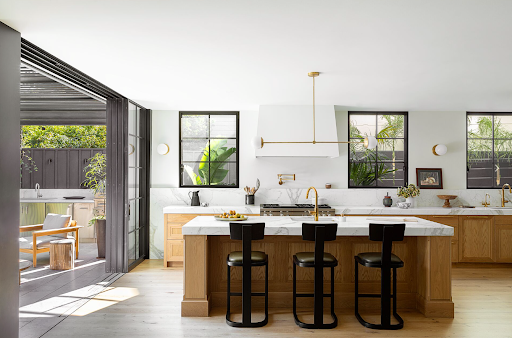
A family gathering can place surprising pressure on one room. Platters arrive, drinks need ice, children ask for snacks and used dishes collect before the main course is served. A scullery can absorb much of that activity, but its value is not simply that it hides mess. Planned well, it changes the sequence of entertaining by giving preparation, storage and cleaning their own supporting space.
The first benefit is separation. The main kitchen can remain the social centre while noisy or untidy work moves behind the scenes. A second sink may support washing vegetables, filling large pots or clearing glasses. Small appliances can stay ready for use without occupying the main bench. Luxury kitchens often use this division to keep the visible room calm, although the scullery still needs to be pleasant and efficient enough for regular work.
The connection between the two rooms is crucial. A narrow doorway beside the cooking zone may create a bottleneck, especially when several people are carrying food. A wider opening, two access points or a carefully placed door can improve flow. The scullery should not become a distant store reached by a long detour. Items used in both spaces, such as serving boards or pantry goods, need positions that make sense from either side.
A family’s entertaining style should determine the fit-out. Hosts who prepare food in advance may need generous refrigeration and labelled pantry storage. Those who cook during gatherings may value a second dishwasher, warming space or a bench for plating. Families with young children might use the room for lunch boxes and everyday snacks. The strongest plan supports ordinary weekdays as well as large occasions, so the area does not sit idle between parties.
Ventilation, light and acoustics affect comfort. Closing a door can contain appliance noise, but it can also trap heat and smells. Extraction and airflow should suit the equipment and the room’s construction. Good task lighting is essential because much of the work is detailed. Hard surfaces may amplify clatter, so quiet hardware and considered finishes can make the space less tiring during a long event.
Storage should be more specific than a wall of cupboards. Deep shelves can hide ingredients, while open shelves may look busy and gather dust. Drawers, adjustable shelving and vertical dividers often make contents easier to see. Heavy platters belong close to the serving route. Cleaning products should be separated from food, and bins should sit where clearing naturally occurs. These practical choices are what make the room feel effortless.
A scullery also changes the experience of guests. They can enjoy the main room without watching every stage of washing and clearing, while the host can keep useful items close. Yet complete concealment is not always desirable. A partially open connection may help the cook remain involved in conversation. Luxury kitchens should balance privacy with contact, rather than treating the supporting room as a place where one person disappears to work alone.
Privacy can also be controlled through sightlines. From the dining table, an open doorway may frame attractive shelves rather than a sink full of dishes. A return wall, glazed panel or change in joinery depth can screen the busiest area without closing it completely. In luxury kitchens, this kind of partial concealment often works better than a solid door because it preserves light and communication. The host can move between tasks while guests still feel connected to the activity.It also supports easier supervision.
The decision to include a scullery should still reflect available space. A cramped secondary room can be less useful than one well-planned kitchen with a strong pantry and cleaning zone. The best result comes from testing real movements, appliance doors and bench depths before building. When proportions and access are right, the scullery becomes more than overflow storage. It gives a family freedom to prepare, host and reset the home without allowing each stage to compete for the same surface.













+ There are no comments
Add yours