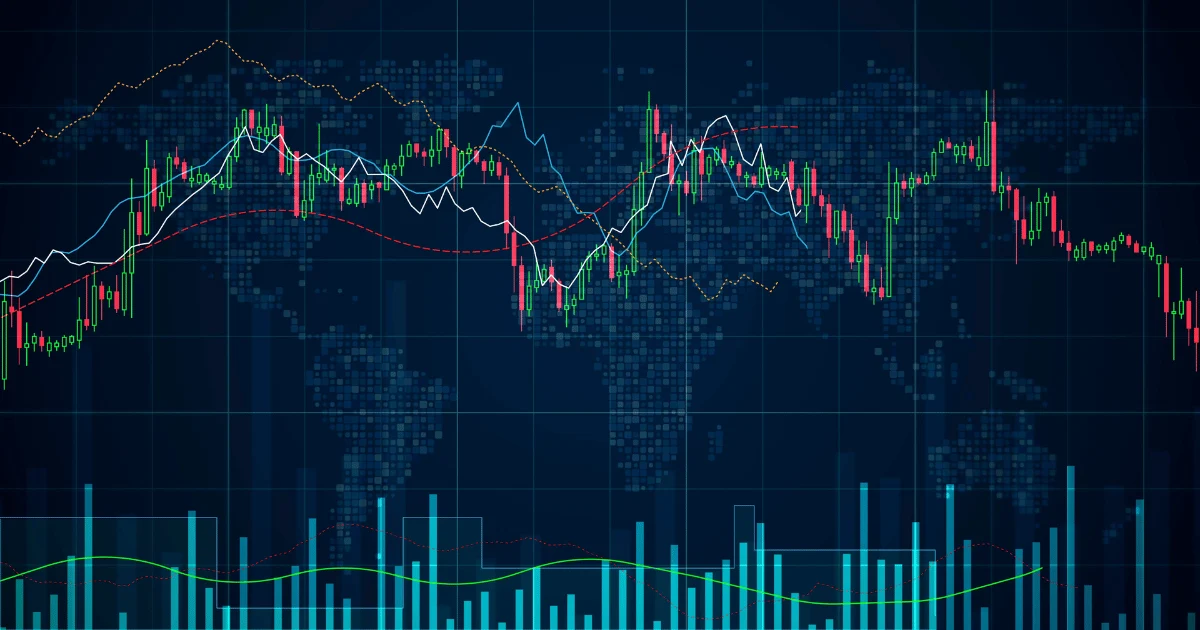
News travels fast and means less than it appears to. By the time a headline reaches a retail trader’s screen, the price response has often already begun, driven by participants with earlier access, stronger context, and a more sophisticated interpretation of what the data actually means. Chasing that response is a low-probability exercise, and seasoned traders learn this either by experiencing the losses firsthand or by recognizing over time that their most profitable trades have little to do with news and everything to do with what the chart was already showing before the catalyst arrived.
The relationship between news and price is far less straightforward than financial media implies. Positive economic data does not always produce a rally. A rate decision that exceeds expectations can still trigger a sharp reversal. A geopolitical event that appears unambiguously bearish for a currency can see that currency strengthen within hours. Price is the aggregate of all participant behavior, including that of participants who anticipated the news, positioned ahead of it, and are now taking profit into the reaction. Traders who internalize this dynamic stop treating news as instruction and start treating price behavior around news events as information worth studying independently.
Time spent on TradingView charts builds a form of market intelligence that financial commentary cannot replicate. The trader who has watched a particular instrument behave across dozens of situations around a specific support zone possesses knowledge no article can convey. That knowledge is spatial and experiential. It lives in the visual record of having watched price test a level repeatedly, of having recognized the subtle difference between a genuine hold and a slow erosion through support that eventually gives way. Commentary can describe a market, but time on charts builds genuine familiarity with it.
Signal density is another dimension worth considering. A serious trader operating across multiple instruments and sessions encounters a continuous flow of structural data: breakouts, failed tests, compression zones, volume anomalies, and session range expansions. The result of that sustained observational stream, accumulated over months and years, is a refined intuition, one that fundamentally changes how markets are experienced. One trader who spent a year studying charts rather than financial news described the transition as moving from spectator to participant, from watching a conversation to understanding the language it was conducted in.
News consumption carries a psychological cost that chart-oriented traders typically underestimate until they cut back. Financial commentary is routinely packaged in ways that generate anxiety, urgency, or premature conviction. Reading that a currency is under extreme pressure or that a stock is on the verge of a breakout before examining the actual price creates a cognitive bias that can color the entire session. The chart, by contrast, simply shows what happened. It carries no editorial agenda. A clean chart reviewed with disciplined eyes gives a trader the opportunity to form their own judgment before external framing has the chance to interfere.
The traders who sustain strong performance over the long term are not those with the fastest news feeds. They are the ones who have built a close working relationship with TradingView charts, who have spent enough time with their screens to recognize behavioral patterns before they fully develop, and who trust that relationship more than the interpretations of commentators whose incentives and time horizons rarely align with their own. News occupies a legitimate role as context, as background awareness of scheduled events and broader developments, but context is not signal, and failing to distinguish between the two is one of the more costly habits a trader can carry into a live session.






+ There are no comments
Add yours