Have you ever experienced that sharp, throbbing pain in your tooth that keeps you awake at night? Does the thought of losing a tooth fill you with dread? And have you been putting off that dental appointment because you’re terrified of what the dentist might say?
If you’re dealing with a tooth infection, you’re certainly not alone. Thousands of Australians face this exact situation every year, and many are unsure about their treatment options. The good news? Root canal treatment has come a long way from its scary reputation, and it’s actually your best bet for keeping your natural tooth while eliminating that painful infection.
In this article, we’ll break down everything you need to know about root canal treatment. You’ll discover what the procedure involves, how to spot the warning signs of an infected tooth, and why saving your natural tooth beats extraction every time. We’ll also tackle those burning questions about pain, cost, and recovery after root canal treatment. By the end, you’ll have all the information you need to make an informed decision about your dental health and understand why root canal treatment is often the best solution for preserving your smile.
What Is Root Canal Treatment?
Root canal treatment, also called endodontic therapy, is a dental procedure designed to save a tooth that’s been severely damaged by infection or decay. Rather than pulling out the tooth entirely, your dentist removes the infected tissue from inside, cleans everything out, and seals it back up.
How Does Root Canal Treatment Work?
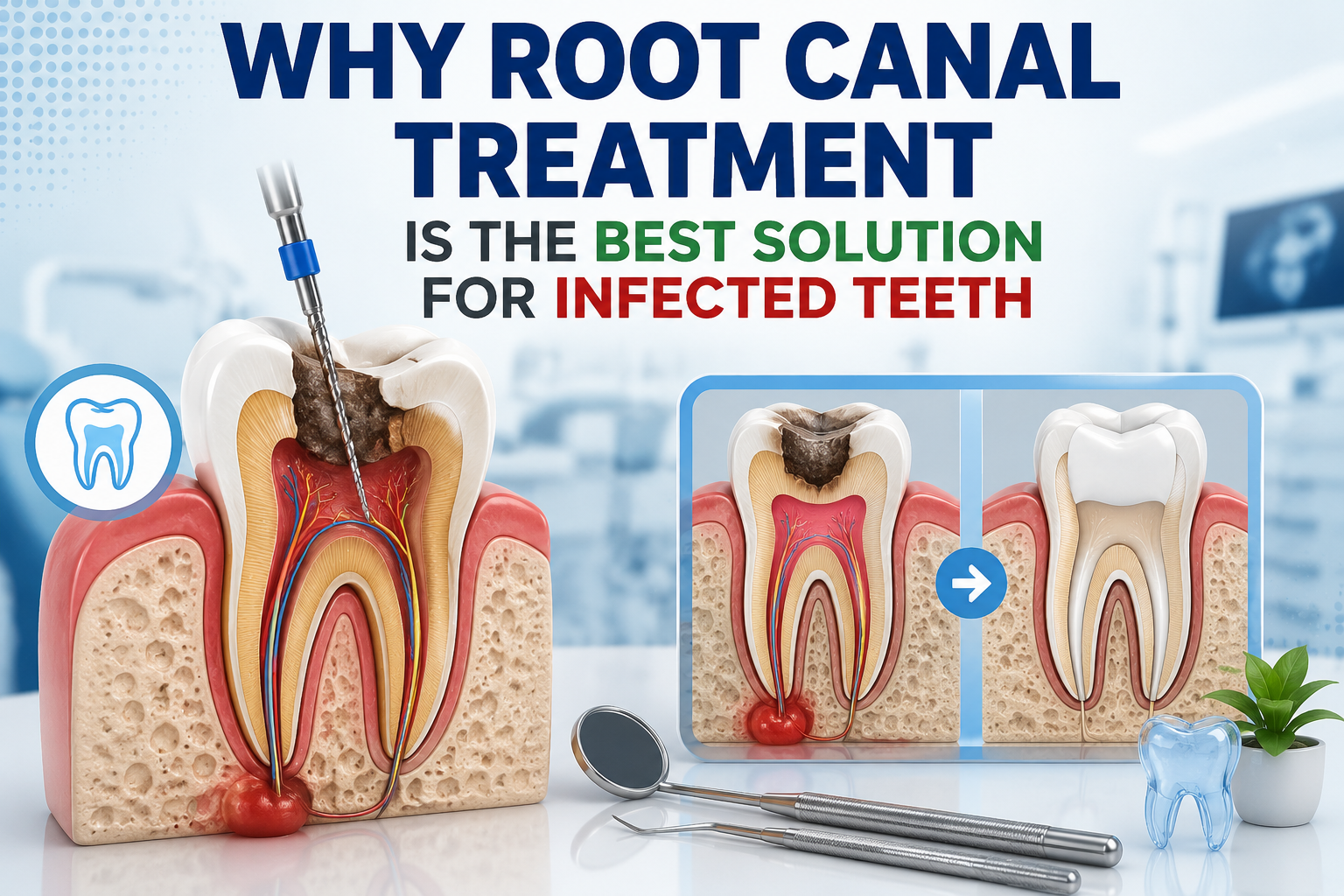
Inside every tooth, there’s a soft area called the pulp. This contains nerves, blood vessels, and connective tissue. When bacteria get in—usually through a deep cavity or crack—the pulp becomes infected. This infection causes inflammation, pain, and can eventually lead to an abscess.
Root canal treatment works by removing the infected pulp completely. Once the inside of the tooth is clean and bacteria-free, your dentist fills the space with a special material and seals it. The tooth can then function normally, minus the infected tissue that was causing all those problems.
What Happens During a Root Canal Procedure Step by Step?
The procedure typically takes one or two visits to complete. First, your dentist takes X-rays to see the shape of your root canals and check for signs of infection. Next, they apply local anaesthetic to numb the area—you won’t feel a thing during the actual procedure.
Your dentist then places a rubber dam around the tooth to keep it dry and saliva-free. They create a small opening in the crown of the tooth to access the pulp chamber. Using tiny instruments, they carefully remove the infected pulp, clean the canals, and shape them for filling. Finally, they fill the canals with a rubber-like material and seal the tooth. Many patients need a crown afterwards to protect and strengthen the treated tooth.
Why Root Canal Treatment Is the Best Solution for Saving Your Natural Tooth
When it comes to dealing with an infected tooth, you essentially have two choices: root canal treatment or extraction. Here’s why saving your natural tooth is almost always the better option.
Root Canal vs Tooth Extraction: Which Is Better?
While extraction might seem like the quicker and easier option, it often comes with significant long-term drawbacks. Once a tooth is removed, you’ll usually need to replace it with a dental implant, bridge, or denture—all of which can be more expensive and may require multiple additional procedures.
In comparison, root canal treatment allows you to preserve your natural tooth structure while eliminating infection and pain. Your natural tooth will almost always function better than an artificial replacement, no matter how advanced modern dentistry has become. Another major benefit of root canal treatment is that it helps maintain jawbone density and prevents neighbouring teeth from shifting out of alignment, which can lead to further dental complications over time.
The Long-Term Benefits of Keeping Your Natural Teeth
Your natural teeth are designed to last a lifetime with proper care. A successfully treated tooth can serve you well for many years—often decades. You’ll maintain your natural bite and chewing efficiency, and your smile stays intact.
What’s more, the cost of root canal treatment plus a crown is typically less than extraction followed by an implant. It’s a win-win situation for both your health and your wallet.
Is Root Canal Treatment Painful?
Let’s address the elephant in the room. The phrase “root canal” has become synonymous with pain in popular culture, but this reputation is outdated and unfair.
What Does a Root Canal Feel Like?
Modern root canal treatment is virtually painless. Your dentist uses effective local anaesthesia to completely numb the area before starting. Most patients report feeling pressure or slight discomfort, but nothing more than what you’d experience during a regular filling.
In fact, many people find that the procedure actually provides relief. If you’ve been dealing with the throbbing pain of an infected tooth, having that infection removed can feel like a massive weight lifted.
How Modern Dentistry Has Transformed the Root Canal Experience
Today’s dental techniques and technology have revolutionised the root canal experience. Digital X-rays provide clearer images for precise treatment planning. Rotary instruments make the procedure faster and more efficient. Improved anaesthetics ensure you stay comfortable throughout.
Dentists now also have better understanding of pain management, both during and after the procedure. Many practices offer sedation options for anxious patients, making the whole experience far less stressful than it once was.
What Happens If You Don’t Treat an Infected Tooth?
Ignoring a tooth infection isn’t just uncomfortable—it can be downright dangerous. The consequences of delaying treatment extend far beyond your mouth.
Can a Tooth Infection Spread to Other Parts of Your Body?
Yes, absolutely. Bacteria from an untreated tooth infection can spread to your jaw, head, neck, and even your bloodstream. In rare but serious cases, this can lead to life-threatening conditions like sepsis or Ludwig’s angina (a severe infection under the tongue).
Root Canal Recovery: What to Expect
Recovery from root canal treatment is typically straightforward. Most people return to normal activities the very next day.
How Long Does It Take to Recover from a Root Canal?
Initial recovery takes just a few days. You might experience some tenderness or mild discomfort for 24-48 hours, which over-the-counter pain relievers can easily manage. Complete healing of the surrounding tissues usually occurs within one to two weeks.
How Successful Is Root Canal Treatment?
Root canal treatment boasts impressive success rates, making it one of the most reliable dental procedures available.
How Long Does a Root Canal Last?
With proper care, a root canal-treated tooth can last a lifetime. Studies show success rates of 85-97%, depending on various factors. The key to longevity is getting a good quality restoration (usually a crown) and maintaining excellent oral hygiene.
Can a Root Canal Fail?
While uncommon, root canal failure can occur. Reasons include undetected canals, incomplete cleaning, or new decay developing. If failure occurs, retreatment or apicoectomy (a minor surgical procedure) can often save the tooth.
Taking Action to Save Your Smile
Root canal treatment truly is the best solution for infected teeth. It eliminates pain, removes infection, and preserves your natural tooth—all in one procedure. The scary reputation simply doesn’t match the reality of modern dental care.
If you’re experiencing symptoms of a tooth infection, don’t put off seeking help. The sooner you act, the better your chances of a straightforward treatment and excellent outcome. Your dentist can assess your situation and recommend the best path forward.
Your natural teeth are worth saving. With root canal treatment, you can keep your smile intact, maintain proper function, and enjoy years of trouble-free chewing. Book that appointment today—your future self will thank you for it.











+ There are no comments
Add yours