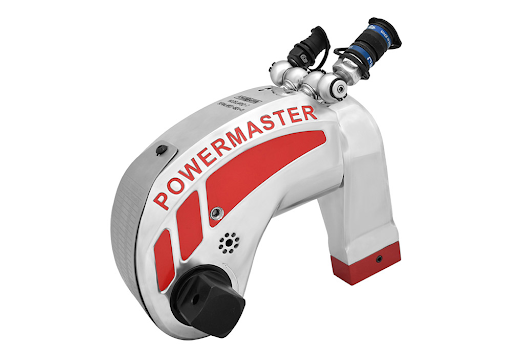
Heavy industries function under harsh environmental conditions where machinery reliability and safety are of utmost importance. Critical bolting applications can be found in power generation stations, oil refining plants, petrochemical units, and oil and gas offshore rigs, among other areas, where the bolts need to be tightened in order to have adequate preload that can bear extreme pressures, vibrations, and temperature conditions.
The hydraulic bolt tensioner allows for an exact and reliable tightening process where the bolts are stretched prior to the tightening of the nuts with axial force.
Why Hydraulic Bolt Tensioning Is Preferred in Heavy Industries
In areas where pressure vessels, heat exchangers, turbines, pumps, compressors, and large flanges are installed, even the slightest difference in the preload of the bolts may cause leakage from the gaskets, fatigue to the bolts, or failure of the equipment itself. The use of hydraulic tensioning will provide controlled and consistent preload of the bolts.
1. Delivers Precise and Uniform Bolt Preload
The hydraulic bolt tensioner uses axial force to stretch the bolt prior to torquing the nut. The preload in this case is created by stretching the bolt instead of torquing it; therefore, the effects of friction between the threads and the nut are minimized.
2. Minimizes Torsional Stress on Fasteners
Tightening by torque applies the load to the bolt and twists it at the same time, generating torsion in the bolt, which may affect the efficiency of fastening. Tightening by hydraulic tension stretches the bolt, but does not twist it, which makes its performance better.
3. Improves Flange Sealing and Joint Integrity
Equal loading of bolts ensures uniform distribution of clamping pressure on the flange surface. It facilitates even gasket compression and thus reduces the possibility of leakage in high-pressure and high-temperature applications, which are prevalent in oil refineries and chemical plants.
Common applications include:
- Steam and gas turbines
- Heat exchangers
- Pressure vessels
- Pipeline and ANSI flanges
- Pumps and compressors
- Offshore and marine equipment
4. Reduces Maintenance Time During Shutdowns
Plant shutdowns are well-planned in such a way that they do not affect production in a major way. The hydraulic tensioner enables the tightening of many bolts at once, and hence allows maintenance teams to remove or install components easily.
5. Enhances Workplace Safety
Manual application of high torque as well as using impact tools can put the technician at risk of physical strain and hazards. On the other hand, hydraulic tensioning applies the use of hydraulic force that creates the preload.
6. Extends the Service Life of Equipment
Appropriate and accurate pre-tensioning of bolts helps prevent loosening due to vibration, fatigue of the bolts, and uneven loading. This prevents damage to seals, increases stability of the equipment, and enhances the lifespan of costly industrial machinery.
7. Delivers Repeatable and Reliable Results
Hydraulic tensioning results in very consistent preload values regardless of the lubrication or thread conditions. Such a degree of consistency assists in satisfying engineering requirements and quality specifications, especially in cases where the accuracy of the fastening process impacts equipment performance.
Choosing the Right Hydraulic Tensioning Solution
The proper selection of hydraulic tensioning tools depends on some specific parameters such as:
- Size of the bolts that need to be tensioned.
- Preload required in order to create certain clamping force.
- Flange type matching the joint and bolt pattern.
- Working clearance available in the area of the tool operation.
- Pressure rating of the system.
Right selection of the hydraulic tensioning solution results in increased efficiency of the maintenance process, better preload accuracy, and improved reliability of industrial equipment.
Conclusion
In heavy industries, reliable operation hinges on fastening. A bolt tensioner is a solution that guarantees accurate tensioning, avoids most problems encountered during torque tightening, and makes it possible to achieve leak-proof connections. This tool can be used for turbines, pressure vessels, heat exchangers, or even pipelines and will ensure better maintenance efficiency and performance.










+ There are no comments
Add yours