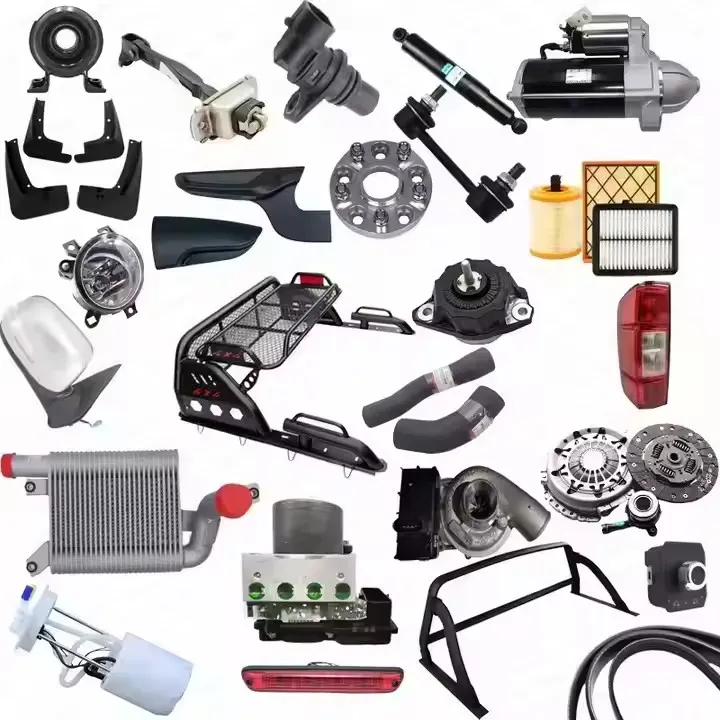
Owning an Audi comes with an expectation of refined performance, advanced engineering, and dependable driving. When a component needs replacement, however, finding the right part can become surprisingly complicated. Different model years, trims, body styles, and specifications may use different components, making compatibility an important consideration. Working with a dependable spare parts wholesaler for Audi can make the process more straightforward, particularly for workshops, retailers, fleet operators, and individual owners who want quality without unnecessary sourcing delays.
Buying the correct spare part is not simply about finding something that looks similar. It involves checking specifications, understanding the difference between genuine, OEM, and aftermarket components, and selecting a supplier with a reliable track record.
Start With Your Audi’s Exact Details
The first step is identifying the vehicle accurately. Audi has a broad range of models, including the A3, A4, A5, A6, A7, A8, Q3, Q5, Q7, Q8, R8, and TT. Even within the same model, components can differ between generations and production years.
Before placing an order, keep the following information available:
- Audi model and model year
- Engine or variant information
- Left- or right-hand component requirement
- Part number, if available
- VIN or vehicle identification details
- Photographs of the damaged component, where useful
A supplier can use these details to narrow down compatible options. This is particularly important for body and lighting components, where a small difference in shape, mounting points, sensors, or electrical connections can affect installation.
Understand What “Genuine” Actually Means
The word “genuine” is frequently used in the spare parts market, but buyers should understand what they are actually purchasing. Genuine Audi parts are supplied under the vehicle manufacturer’s brand and specifications. OEM parts are produced by manufacturers that supply components for original vehicle production, while aftermarket parts are made by independent manufacturers and can vary considerably in quality.
That does not automatically make every aftermarket component inferior. Reputable suppliers can offer OE-equivalent or quality aftermarket parts that provide a practical alternative to branded components. The important point is to understand the product category instead of assuming that every cheaper part offers the same standard.
Check the Part Number Before the Price
Price naturally attracts attention, but the cheapest listing is not necessarily the most economical choice. A component may look correct while having a different part number, revision, connector, mounting arrangement, or specification. Installing an incompatible part can lead to additional labour, delays, returns, or further replacement costs.
Where possible, compare the supplied part number with the number on the original component or the vehicle’s parts documentation. If you are unsure, ask the supplier to confirm compatibility before purchasing. This simple step can prevent an expensive mistake.
Choose a Supplier With Audi-Specific Experience
A supplier’s experience matters because Audi’s parts catalogue is extensive. A company that regularly handles European automotive brands is more likely to understand model-specific requirements and common fitment questions. For buyers in the UAE, a supplier with established local operations can also simplify communication, purchasing, and delivery.
For businesses purchasing repeatedly, working with an experienced Audi spare parts trading company in the UAE can also make sourcing more efficient. Instead of searching for individual components from multiple sellers, workshops and retailers can develop a dependable supply relationship.
Look Beyond Engine Components
When people think about Audi spare parts, mechanical components often come to mind first. Yet replacement requirements can cover many other areas.
Depending on the vehicle and repair, buyers may need:
- Headlamps and tail lamps
- Fog lamps and DRLs
- Bumpers and radiator grilles
- Fenders and body panels
- Radiators and condensers
- AC components
- Cooling-system components
- Mirrors and exterior trim
- Interior components
- Electrical parts
- Brake-system components
A supplier with a broad inventory can save considerable time when several related components are required after an accident or during a refurbishment project.
Inspect Quality and Fitment Information
Quality is not something buyers should judge from photographs alone. Ask questions about the manufacturer, specifications, compatibility, and quality assurance process.
For online purchases, carefully review the product description. Look for information such as:
- Applicable Audi model and production years
- Component side or position
- Part number
- Product type
- Manufacturer or brand
- Included accessories
- Compatibility with sensors or electronic systems
This is especially relevant for newer Audi vehicles, where lighting and body components can incorporate sophisticated electronic features.
Consider Delivery When Timing Matters
For workshops and automotive businesses, the availability of a part is only half the equation. Delivery time can directly affect repair schedules and customer satisfaction. Before ordering, check whether the item is in stock, how quickly the order can be processed, and whether delivery is available to your location. For urgent repairs, it is sensible to confirm the expected dispatch and delivery timeline rather than relying only on a general estimate.
Do Not Ignore Return and Support Policies
Even careful buyers can occasionally receive a component that is unsuitable for a particular vehicle. A clear return process therefore matters. Before purchasing, understand the supplier’s conditions regarding damaged, defective, or incorrectly ordered products.
Check whether the item needs to remain in its original packaging and whether prior authorization is required for a return. It is also useful to choose a supplier that can answer fitment questions before purchase. Good product support can prevent a return from becoming necessary in the first place.
Why the Right Supplier Matters for Businesses
For individual Audi owners, buying one replacement component may be an occasional task. For workshops, retailers, and distributors, it is an ongoing procurement activity.
Businesses need consistency in several areas:
- Product availability: Frequently required components should be reasonably accessible.
- Fitment accuracy: Incorrect parts create wasted labour and customer delays.
- Product quality: Consistent standards help protect business reputation.
- Pricing: Competitive rates become more important with recurring orders.
- Logistics: Reliable shipping supports smoother workshop operations.
- Communication: Quick responses can make sourcing decisions easier.
This is why choosing a specialist supplier can be more valuable than simply choosing the seller offering the lowest advertised price.
Make the Purchase With a Verification Checklist
Before confirming an Audi spare-part order, take a minute to verify the essentials:
- Is the Audi model and year correct?
- Does the part number match?
- Is the component for the correct side or position?
- Does it support the required sensors or features?
- Is the product genuine, OEM, or aftermarket?
- Has the supplier explained the quality standard?
- Are availability and delivery timelines clear?
- Do you understand the return conditions?
These checks take little time but can prevent considerable inconvenience later.
Conclusion
Buying Audi spare parts in the UAE becomes much easier when quality, compatibility, supplier experience, and logistics are considered together. A visually similar component is not enough; the part should match the vehicle’s specific requirements and come with clear product information. For workshops, retailers, and regular buyers, partnering with an experienced Audi spare parts trading company in the UAE can also simplify repeat sourcing and reduce procurement headaches. Beta Auto Spare Parts brings long-standing experience in the UAE automotive parts market and serves Audi among several major European brands. Ultimately, careful verification and a dependable supplier are the two strongest safeguards against costly parts-buying mistakes.










+ There are no comments
Add yours